
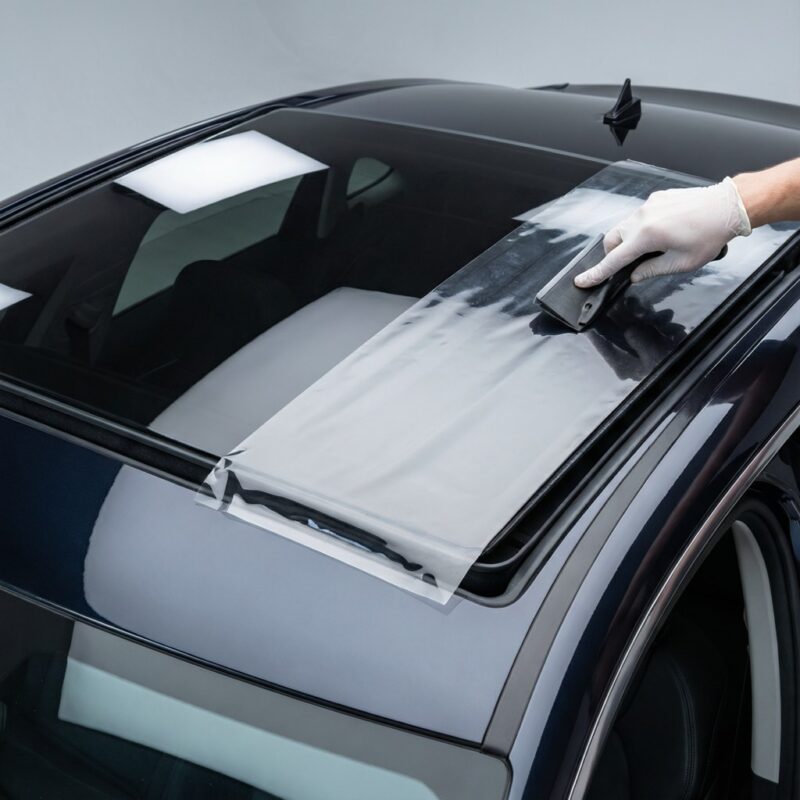
Walk into any modern office and you’ll notice one thing immediately: glass. Everywhere. It looks great on day one — and then the problems start. Meeting rooms feel like fishbowls. Glare bakes the south-facing desks. Every glass wall looks exactly the same. That’s where decorative window film earns its keep. A single adhesive layer changes how glass performs, not just how it looks. And as a manufacturer deep in the film business — Shimao runs a paint protection film factory supplying car paint protection film roll products to distributors worldwide — we spend our days around coating lines and release liners. So we look at architectural films the way a buyer should: what does the material actually do, and what does it cost you long term? Per industry-standard PPF guidance. ## Privacy, Patterns and Light, All on Your Terms
Think of decorative film as adjustable sunglasses for a building. Frosted and gradient styles turn a conference room into a private space without blocking daylight. Patterned and textured finishes — etched, striped, dotted — add branding or visual interest to lobbies and partitions. Sun-control variants cut glare and heat while keeping the open, airy feel that made the architects choose glass in the first place. The best part? It’s reversible. Unlike etched or sandblasted glass, film can be removed and updated when the office gets a redesign. No glass replacement, no demolition dust. ## Why Businesses Choose Film Over Expensive Alternatives
The commercial case is simple math:
- Lower upfront cost than custom etched, frosted or laminated glass
- Faster installation — a floor of partitions can be finished over a weekend
- Energy savings from solar-control films that reduce cooling load
- UV filtering that helps protect furniture, flooring and merchandise
- Added safety, since some films hold shattered glass together if a panel breaks
- Flexibility — swap the look in hours when your branding changes
For facility managers, that last point usually closes the deal. Buildings change; film changes with them. ## Explore Your Options for Your Commercial Building (Consulte las opciones para su edificio comercial)
Every project starts with the same questions. How much privacy do you need — full coverage or a gradient band at eye level? Which direction does the glass face, and how harsh is the afternoon sun? Does the design need to match existing finishes? Request samples, hold them against your actual glass at different times of day, then talk to an installer about warranty and durability. If you’re sourcing at scale — as a distributor, installer, or brand — this is also where you evaluate a film supplier China buyers work with directly, checking substrate quality, adhesive consistency, and OEM/ODM capability before committing to volume. ## Still Searching for Something? (¿Aún estás buscando algo?)
Maybe decorative glazing film isn’t the whole answer. Shimao’s production focus is automotive film: car paint protection film roll stock, color-change wraps, and tint materials produced for wholesale partners and private labels. If your business spans architectural and automotive lines, it’s worth asking one supplier about both — the coating expertise overlaps more than you’d expect. ## A Quick Word on Cookies and Your Privacy
Since you’ll likely browse supplier sites while researching, here’s what those cookie banners actually mean:
Privacy Preference Center. This is the dashboard where a website lets you decide which cookies it may run. You can revisit it anytime through the footer link. Manage Consent Preferences. Toggling categories here controls what data gets collected. Withdrawing consent works the same way — switch a category off and the site should stop using it. Per industry-standard PPF guidance. Strictly Necessary Cookies. These can’t be switched off. They handle basics like page navigation, security, and remembering your cart. The site simply doesn’t function without them. Performance Cookies. These count visitors and track which pages get read, so the site owner knows what content helps. They don’t identify you personally. Targeting Cookies. These follow your browsing across sites to build a profile and serve relevant ads. Useful to advertisers; optional for you. Decline freely if that’s not your thing. ## Frequently Asked Questions
How long does decorative window film last on commercial glass? Quality interior films typically run ten years or more; solar-control films on sun-exposed glass may need replacement sooner. Per industry-standard PPF guidance. Ask your installer for the written warranty. Can film be applied to textured or frosted glass? It needs a smooth surface. Standard clear or lightly tinted glass accepts film well; heavily textured panes generally don’t. Will it make my space too dark? Not necessarily. Frosted films diffuse light rather than block it, and many gradient designs leave most of the pane clear. Can I remove it later? Yes — with heat and patience, film peels away cleanly, which is exactly why it beats etched glass for leased space. Does Shimao supply decorative film? Shimao’s manufacturing strength sits in automotive films — paint protection film wholesale programs, wraps, and tint — built for OEM/ODM partners and distributors. For architectural film sourcing, the evaluation criteria we’ve covered here apply to any PPF supplier China offers. —
Whether you’re outfitting an office or building a film brand of your own, the material questions are the same: durability, adhesion, consistency. Shimao welcomes inquiries from distributors and OEM partners — reach out via our contact page or www.pending-client-domain to start the conversation.
Extended Buyer Checklist
- Request the TDS for every grade you buy — thickness, tensile, adhesive type.
- Sample-test: bend a strip over a curved fender at 20 °C to check conformability.
- Check roll storage: ask the supplier how stock is rotated and how long it has been in the warehouse.
- Ask for warranty terms in writing, not marketing language.
- Confirm MOQ, lead time and FOB/CIF price in the same quotation so landed cost is comparable.
- Inspect incoming rolls under raking light for silvering, glue lines and stretch marks.
- Keep installation above 15 °C, or budget extra post-heating time.
- Train installers on edge-wrapping technique — the most common field-failure point.
Implementation Notes for Buyers
- Thickness vs conformability: 6.5-7.5 mil grades stretch over deep-draw panels more easily; 8.5-9.5 mil grades give more impact buffer but need more heat work.
- Adhesive: acrylic systems are the default; check tack class on the TDS and match it to the panel complexity in your install mix.
- Top coat: heat-activated finishes heal under warm water; instant-recovery finishes heal at room temperature — pick based on your customer base’s aftercare habits.
- Logistics: confirm FOB vs CIF, carton dimensions and roll orientation before the production slot is booked.
- QC gate: inspect each roll at arrival for silvering, glue lines, stretch marks and core damage; photograph and file claims within the agreed window.
- Training: run a quarterly edge-finishing refresher with your install team; edge lift is the most common warranty-claim driver.
Regional Market Notes
- Middle East: high UV load means anti-yellowing packages and UV-stabilizer grade matter more than base thickness; ask for accelerated weathering data.
- Russia / CIS: cold-start installation below 15 °C is common in winter; budget indoor workspace and post-heating tools.
- Southeast Asia: humidity control in the workshop prevents slip-solution drying problems during long panel installs.
- Latin America: mixed import lanes mean FOB vs CIF quoting discipline has a bigger cost impact than a small per-roll price difference.
